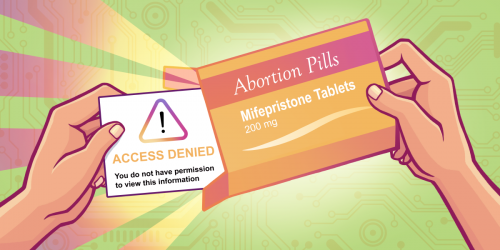

As reproductive rights face growing attacks globally, access to content about reproductive healthcare and abortion online has never been more critical. The internet has essential information on topics like where and how to access care, links to abortion funds, and guidance on ways to navigate potential legal risks. Reproductive rights activists use the internet to organize and build community, and healthcare providers rely on it to distribute accurate information to people in need. And for those living in one of the 20+ states where abortion is banned or heavily restricted, the internet is often the only place to find these potentially life-saving resources.
Nonetheless, both the government and private platforms are increasingly censoring abortion-related speech, at a time when we need it most. Anti-abortion legislators are actively trying to pass laws to limit online speech about abortion, making it harder to share critical resources, discuss legal options, seek safe care, and advocate for reproductive rights. At the same time, social media platforms have increasingly cracked down on abortion-related content, leading to the suppression, shadow-banning, and outright removal of posts and accounts.
This year, we worked tirelessly to fight censorship of abortion-related information online—whether it originated from the largest social media platforms or the largest state in the U.S.
As defenders of free expression and access to information online, we have a role to play in understanding where and how this is happening, shining a light on practices that endanger these rights, and taking action to ensure they’re protected. This year, we worked tirelessly to fight censorship of abortion-related information online—whether it originated from the largest social media platforms or the largest state in the U.S.
Exposing Social Media Censorship
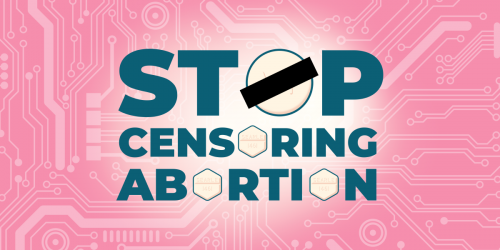
At the start of 2025, we launched the #StopCensoringAbortion campaign to collect and spotlight the growing number of stories from users that have had abortion-related content censored by social media platforms. Our goal was to better understand how and why this is happening, raise awareness, and hold the platforms accountable.
Thanks to nearly 100 submissions from educators, advocates, clinics, researchers, and influencers around the world, we confirmed what many already suspected: this speech is being removed and restricted by platforms at an alarming rate. Across the submissions we received, we saw a pattern of over enforcement, lack of transparency, and arbitrary moderation decisions aimed at reproductive health and reproductive justice advocates.
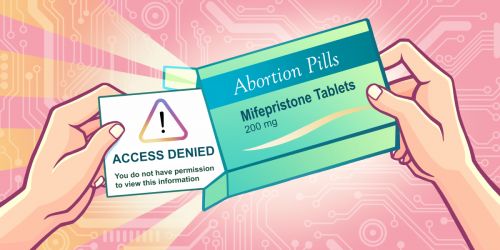
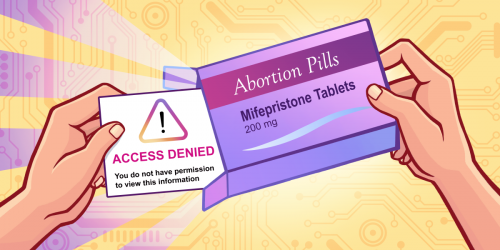
Notably, almost none of the submissions we reviewed actually violated the platforms’ stated policies. The most common reason Meta gave for removing abortion-related content was that it violated policies on Restricted Goods and Services, which prohibit any “attempts to buy, sell, trade, donate, gift or ask for pharmaceutical drugs.” But the content being removed wasn’t selling medications. Most of the censored posts simply provided factual, educational information—content that’s expressly allowed by Meta.
In a month-long 10-part series, we broke down our findings. We examined the trends we saw, including stories of individuals and organizations who needed to rely on internal connections at Meta to get wrongfully censored posts restored, examples of account suspensions without sufficient warnings, and an exploration of Meta policies and how they are wrongly applied. We provided practical tips for users to protect their posts from being removed, and we called on platforms to adopt steps to ensure transparency, a functional appeals process, more human review of posts, and consistent and fair enforcement of rules.
Social media platforms have a First Amendment right to curate the content on their sites—they can remove whatever content they want—and we recognize that. But companies like Meta claim they care about free speech, and their policies explicitly claim to allow educational information and discussions about abortion. We think they have a duty to live up to those promises. Our #StopCensoringAbortion campaign clearly shows that this isn’t happening and underscores the urgent need for platforms to review and consistently enforce their policies fairly and transparently.
Combating Legislative Attacks on Free Speech
On top of platform censorship, lawmakers are trying to police what people can say and see about abortion online. So in 2025, we also fought against censorship of abortion information on the legislative front.
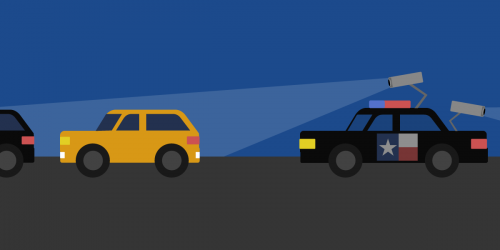
EFF opposed Texas Senate Bill (S.B.) 2880, which would not only outlaw the sale and distribution of abortion pills, but also make it illegal to “provide information” on how to obtain an abortion-inducing drug. Simply having an online conversation about mifepristone or exchanging emails about it could run afoul of the law.
On top of going after online speakers who create and post content themselves, the bill also targeted social media platforms, websites, email services, messaging apps, and any other “interactive computer service” simply for hosting or making that content available. This was a clear attempt by Texas legislators to keep people from learning about abortion drugs, or even knowing that they exist, by wiping this information from the internet altogether.
We laid out the glaring free-speech issues with S.B. 2880 and explained how the consequences would be dire if passed. And we asked everyone who cares about free speech to urge lawmakers to oppose this bill, and others like it. Fortunately, these concerns were heard, and the bill never became law.
Our team also spent much of the year fighting dangerous age verification legislation, often touted as “child safety” bills, at both the federal and state level. We raised the alarm on how age verification laws pose significant challenges for users trying to access critical content—including vital information about sexual and reproductive health. By age-gating the internet, these laws could result in websites requiring users to submit identification before accessing information about abortion or reproductive healthcare. This undermines the ability to remain private and anonymous while searching for abortion information online.
Protecting Life-Saving Information Online
Abortion information saves lives, and the internet is a primary (and sometimes only) source where people can access it.
As attacks on abortion information intensify, EFF will continue to fight so that users can post, host, and access abortion-related content without fear of being silenced. We’ll keep pushing for greater accountability from social media platforms and fighting against harmful legislation aimed at censoring these vital resources. The fight is far from over, but we will remain steadfast in ensuring that everyone, regardless of where they live, can access life-saving information and make informed decisions about their health and rights.
This article is part of our Year in Review series. Read other articles about the fight for digital rights in 2025.