
State legislatures—from Olympia, WA, to Honolulu, HI, to Tallahassee, FL, and everywhere in between—kept EFF’s state legislative team busy throughout 2025.
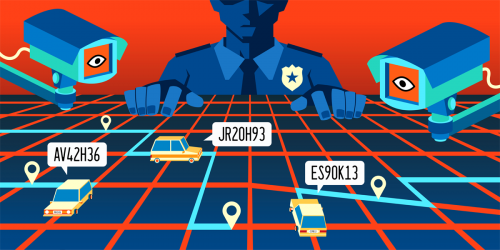
We saw some great wins and steps forward this year. Washington became the eighth state to enshrine the right to repair. Several states stepped up to protect the privacy of location data, with bills recognizing your location data isn't just a pin on a map—it's a powerful tool that reveals far more than most people realize. Other state legislators moved to protect health privacy. And California passed a law making it easier for people to exercise their privacy rights under the state’s consumer data privacy law.
Several states also took up debates around how to legislate and regulate artificial intelligence and its many applications. We’ll continue to work with allies in states including California and Colorado to proposals that address the real harms from some uses of AI, without infringing on the rights of creators and individual users.
We’ve also fought some troubling bills in states across the country this year. In April, Florida introduced a bill that would have created a backdoor for law enforcement to have easy access to messages if minors use encrypted platforms. Thankfully, the Florida legislature did not pass the bill this year. But it should set off serious alarm bells for anyone who cares about digital rights. And it was just one of a growing set of bills from states that, even when well-intentioned, threaten to take a wrecking ball to privacy, expression, and security in the name of protecting young people online.
Take, for example, the burgeoning number of age verification, age gating, age assurance, and age estimation bills. Instead of making the internet safer for children, these laws can incentivize or intersect with existing systems that collect vast amounts of data to force all users—regardless of age—to verify their identity just to access basic content or products. South Dakota and Wyoming, for example, are requiring any website that hosts any sexual content to implement age verification measures. But, given the way those laws are written, that definition could include essentially any site that allows user-generated or published content without age-based gatekeeping access. That could include everyday resources such as social media networks, online retailers, and streaming platforms.
Lawmakers, not satisfied with putting age gates on the internet, are also increasingly going after VPNs (virtual private networks) to prevent anyone from circumventing these new digital walls. VPNs are not foolproof tools—and they shouldn’t be necessary to access legally protected speech—but they should be available to people who want to use them. We will continue to stand against these types of bills, not just for the sake of free expression, but to protect the free flow of information essential to a free society.
This article is part of our Year in Review series. Read other articles about the fight for digital rights in 2025.