

Lawmakers in at least a dozen states believe that they can pass laws blocking young people from social media or require them to get their parents’ permission before logging on. Fortunately, nearly every trial court to review these laws has ruled that they are unconstitutional.
It’s not just courts telling these lawmakers they are wrong. EFF has spent the past year filing friend-of-the-court briefs in courts across the country explaining how these laws violate young people’s First Amendment rights to speak and get information online. In the process, these laws also burden adults’ rights, and jeopardize everyone’s privacy and data security.
Minors have long had the same First Amendment rights as adults: to talk about politics, create art, comment on the news, discuss or practice religion, and more. The internet simply amplified their ability to speak, organize, and find community.
Although these state laws vary in scope, most have two core features. First, they require social media services to estimate or verify the ages of all users. Second, they either ban minor access to social media, or require parental permission.
In 2025, EFF filed briefs challenging age-gating laws in California (twice), Florida, Georgia, Mississippi, Ohio, Utah, Texas, and Tennessee. Across these cases we argued the same point: these laws burden the First Amendment rights of both young people and adults. In many of these briefs, the ACLU, Center for Democracy & Technology, Freedom to Read Foundation, LGBT Technology Institute, TechFreedom, and Woodhull Freedom Foundation joined.
There is no “kid exception” to the First Amendment. The Supreme Court has repeatedly struck down laws that restrict minors’ speech or impose parental-permission requirements. Banning young people entirely from social media is an extreme measure that doesn’t match the actual risks. As EFF has urged, lawmakers should pursue strong privacy laws, not censorship, to address online harms.
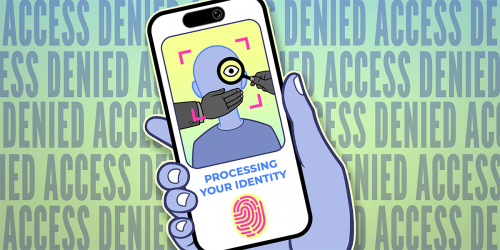
These laws also burden everyone’s speech requiring users to prove their age. ID-based systems of access can lock people out if they don’t have the right form of ID, and biometric systems are often discriminatory or inaccurate. Requiring users to identify themselves before speaking also chills anonymous speech—protected by the First Amendment, and essential for those who risk retaliation.
Finally, requiring users to provide sensitive personal information increases their risk of future privacy and security invasions. Most of these laws perversely require social media companies to collect even more personal information from everyone, especially children, who can be more vulnerable to identify theft.
EFF will continue to fight for the rights of minors and adults to access the internet, speak freely, and organize online.
This article is part of our Year in Review series. Read other articles about the fight for digital rights in 2025.