Update September 10, 2025: Bluesky announced today that it would implement age verification measures in South Dakota and Wyoming to comply with laws there. Bluesky continues to block access in Mississippi.
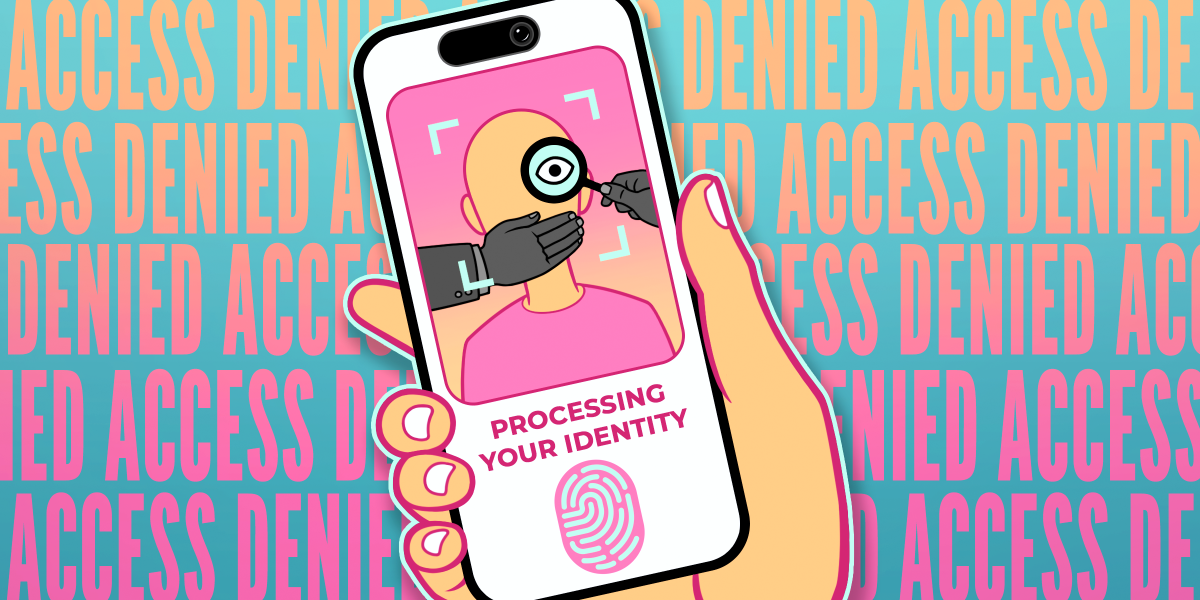
Lawmakers often sell age-verification mandates as a silver bullet for Big Tech’s harms, but in practice, these laws do nothing to rein in the tech giants. Instead, they end up crushing smaller platforms that can’t absorb the exorbitant costs. We've seen this play out in several places in the U.S. and across the globe, and the pattern is clear: age verification laws entrench Big Tech’s dominance, while pushing smaller communities like Bluesky and Dreamwidth offline altogether.
Case Study: Sorry Mississippians, We Can’t Afford You
In the Summer of 2025, when Mississippi's wide-sweeping age-verification law, H.B. 1126, became effective, social platforms Bluesky and Dreamwidth both decided to block all users in Mississippi from their services rather than risk hefty fines under the state’s oppressive age verification mandate.
Bluesky was the first platform to make the announcement. In a public blogpost, Bluesky condemned H.B. 1126’s broad scope, barriers to innovation, and privacy implications, explaining that the law forces platforms to “make every Mississippi Bluesky user hand over sensitive personal information and undergo age checks to access the site—or risk massive fines.” As Bluesky noted, “This dynamic entrenches existing big tech platforms while stifling the innovation and competition that benefits users.” Instead, Bluesky made the decision to cut off Mississippians entirely until the courts consider whether to overturn the law.
About a week later, we saw a similar announcement from Dreamwidth, an open-source online community similar to LiveJournal where users share creative writing, fanfiction, journals, and other works. In its post, Dreamwidth shared that it too would have to resort to blocking the IP addresses of all users in Mississippi because it could not afford the hefty fines.
Dreamwidth wrote: “Even a single $10,000 fine would be rough for us, but the per-user, per-incident nature of the actual fine structure is an existential threat.” The service also expressed fear that being involved in the lawsuit against Mississippi left it particularly vulnerable to retaliation—a clear illustration of the chilling effect of these laws. For Dreamwidth, blocking Mississippi users entirely was the only way to survive.
Age Verification Mandates Don’t Rein In Big Tech—They Entrench It
Proponents of age verification claim that these mandates will hold Big Tech companies accountable for their outsized influence, but really the opposite is true. As we can see from Mississippi, age verification mandates concentrate and consolidate power in the hands of the largest companies—the only entities with the resources to build costly compliance systems and absorb potentially massive fines. While megacorporations like Google (with YouTube) and Meta (with Instagram) are already experimenting with creepy new age-estimation tech on their social platforms, smaller sites like Bluesky and Dreamwidth simply cannot afford the risks.
We’ve already seen how this plays out in the UK. When the Online Safety Act came into force recently, platforms like Reddit, YouTube, and Spotify implemented broad (and extremely clunky) age verification measures while smaller sites, including forums on parenting, green living, and gaming on Linux, were forced to shutter. Take, for example, the Hamster Forum, “home of all things hamstery,” which announced in March 2025 that the OSA would force it to shut down its community message boards. Instead, users were directed to migrate over to Instagram with this wistful disclaimer: “It will not be the same by any means, but . . . We can follow each other and message on there and see each others [sic] individual posts and share our hammy photos and updates still.”
When smaller platforms inevitably cave under the financial pressure of these mandates, users will be pushed back to the social media giants.
This perfectly illustrates the market impact of online age verification laws. When smaller platforms inevitably cave under the financial pressure of these mandates, users will be pushed back to the social media giants. These huge companies—those that can afford expensive age verification systems and aren’t afraid of a few $10,000 fines while they figure out compliance—will end up getting more business, more traffic, and more power to censor users and violate their privacy.
This consolidation of power is a dream come true for the Big Tech platforms, but it’s a nightmare for users. While the megacorporations get more traffic and a whole lot more user data (read: profit), users are left with far fewer community options and a bland, corporate surveillance machine instead of a vibrant public sphere. The internet we all fell in love with is a diverse and colorful place, full of innovation, connection, and unique opportunities for self-expression. That internet—our internet—is worth defending.